|
Everything from common dish soap used in the kitchen to laundry detergent or floor polish and bathroom milder removers, cause pollution. Not just when we use these products full of toxins in our homes (polluting the air with their toxic chemicals), but also when they are manufactured and transported to the stores.
Cleaning products pollute our water supply when they’re washed down the drain. They end up in our lakes, rives and oceans having a negative effect on our health as well as the health of nearby wildlife. According to data published by the Western Regional Pollution Prevention Network, six of every 100 janitorial workers injured on the job each year are hurt by the cleaning chemicals they use. Some of the products we already have in our fridge can be easily and efficiently used as natural cleaners. For ex: - Baking soda can be used to scrub surfaces in much the same way as commercial abrasive cleansers. Baking soda is also great deodorizer: place a box in the refrigerator and freezer to absorb odors and/or before you vacuum, sprinkle it on your carpet. - Lemon Juice. The acid in lemon juice neutralizes hard water deposits, dissolves buildup and dirt on wood, and tarnish on silver. - Grapefruit seed extract and essential oils such as lavender, clove, and tea tree oil have antiseptic properties and operate as natural fungicides. Sometimes choosing eco-friendly cleaning products are a more expensive option, so here is a better tip for the environment and your pocket: make them yourself. I make my own, and by having five dogs in the house, I want to make sure I get rid of bacteria and odors! These are some recipes that I tried and approved: All-Purpose Cleaner: Mix 1/2 cup vinegar and 1/4 cup baking soda (or 2 teaspoons borax) into 1/2 gallon (2 liters) water. Store and keep. Use for removal of water deposit stains on shower stall panels, bathroom chrome fixtures, windows, bathroom mirrors, etc. Another alternative is microfiber cloths which lift off dirt, grease and dust without the need for cleaning chemicals, because they are formulated to penetrate and trap dirt. I also mix around 5 drops of lavender (or tea tree) essential oil by the time I’m cleaning in each liter of these mix to leave a nice smell… Mold Killer: Combine 2 teaspoons of tea tree oil in 2 cups of water in a spray bottle. Shake to blend. Spray on mold and don’t rinse. No-streak glass cleaner for sparkling mirrors and windows: combine 1/4 cup undiluted white vinegar, 1 tbsp cornstarch, and 1 quart warm water. Divide into spray bottles. For a lint-free shine, wipe dry with a sheet of crumpled newspaper or a coffee filter. Tub and tile cleaner recipe: 1 2/3 cups baking soda, 1/2 cup liquid soap, 2 tablespoons vinegar, 1/2 cup water, a few drops of Tea tree essential oil. Mix soda and soap. Add water, vinegar and oil. Store in a squirt-top bottle and shake before using. Rinse thoroughly to avoid leaving a residue. Have a GREEN cleaning time! ;)
0 Comments
Gift Wrapping
Use fabric for wrapping gifts! Inexpensive remnants can be bought for any season or occasion. Tie the fabric with colored yarn. Skip Your Dishwasher's Dry Cycle Doing this saves tons of energy, and all you have to do is give them a quick dry with a dishtowel as you put them away. Boost Your Fridge's Efficiency by filling it up! Keeping your refrigerator full, but not to the point of overstuffing, will allow it to run at max capacity. To help retain cold temperatures when the fridge and freezer are less full, place glass or ceramic pitchers of water in their compartments. Like using ice in a picnic cooler, this will insulate the interior and keep it cold. Refrigerators and freezers account for about a sixth of all electricity use in a typical American home, and they use more electricity than any other single household appliance. Over- or under-crowding makes the fridge work harder to maintain its optimal internal temp (37 degrees F). Have your Own Bags at the car There’s always something we forgot to buy, or some little grocery shopping. For these days, avoid using plastic bags, and when doing a big supermarket shopping that might not fit in one or two recycled/ reusable bags, ask them for a paper bag! Each year the United States consumes 30 billion plastic and 10 billion paper grocery bags, according to the Natural Resources Defense Council. That translates to about 14 million trees and 12 million barrels of oil. And then there's what happens after the bags are used -- they clog landfills, contaminate recycling and composting facilities, and litter the landscape. Avoid Overnight Shipping Select ground transportation, instead of rush delivery, for your mailing needs and cut down on fossil fuel use and pollution. Try to avoid overnight shipping, which burns the most fossil fuels per item. In fact, ground shipping tends to be six times more energy efficient than air. Also, because airplanes release their greenhouse gases way up in the atmosphere, they tend to do more damage than gases emitted at ground level, at least as far as global warming is concerned. Avoiding overnight delivery will also save you a bundle of money, since companies add a hefty price for the service. + info: www.thedailygreen.com  Imagine if every New DAY could create the vibe of new beginnings, new possibilities.. If every new day could have the feeling of Xmas holidays and New Year.. after eating a bit more than normal, being more compassionated, having fun with family and close ones, relax from some days off..., we would set a diet, get inspired by the others.. inspire others.., and have the vibe that creates new energy and make us think about where we are and what do we want.
This all could happen everyday, when we want to change, when things didn't go exactly how we planned or simply when we want to experience something different! - Are you happy with yourself? When you wake up, do you feel good about the things you have to do during your day? Do you do it with pleasure? Are you aware that you are now exactly where you put yourself, right? That no one else is responsible for that, so, if you don't feel good about it, look around and see what can be immediately changed- maybe your job? Maybe your diet or the lifestyle? Set one hour today, go to a quiet place under the sun, take a deep breath and just think about it, maybe write things that bother you, people that hurt you and forgive them, let go if negative feelings. Breathe! Tomorrow read all again and start the easiest step to change the environment where you are. - Do you use the advices you tell others to your own improvement? As a teacher, I tell a lot of things and change students bad habits into good, but sometimes it's just hard to do that myself. I am constantly looking for help: people to adjust my buttons and tools to guide me on healthier habits. Don't be shy to ask for help. Our ego is our worst enemy. Once you find a connection with someone to guide you, start and persist, because the beginning is hard, and success takes time. The Universe conspires, circumstances can change things that we planned in seconds. Use your everyday LIFE LESSONS to adjust, improve, change, have a new experiences and keep evolving with your learning process! HAPPY NEW YOU! 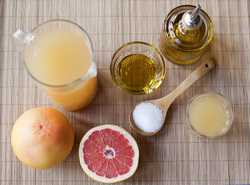 A serious web portal from Brazil that I trust, Natural Vibe, developed a liver cleansing with the assistance of serious professionals, and I decided to translate and share with you.
This process is recommended to people with a liver or vesicle condition, and to help in allergy process, to lose weight, improve digestion, and increase energy. Note that this is a DETOX, and as all processes that will require discipline and change in your eating habits, it's strongly recommended that you check with your physician, especially if you have any health condition. During the DETOX, there's a two days deep cleansing, and for that, it's mandatory that you are able to be relaxed and have rest during it. So, chose two days that you are able to stop working or stressing with anything. Feel free to post comments and share your experience if you do it! THE DETOX: During six days drink one liter of apple juice (it's recommended to be home made, natural and organic) during the morning until 4pm, with a two hours break from the last meal. Ex: 500ml before breakfast and 500ml after lunch. It's recommended that during those days, you cut animal meat (especially pork, cow and poultry because of toxins), processed food, refined sugar and caffeine. For the two day cleansing you will need 1) Magnesium sulfate - 4 soup spoons (60g) 2) Mineral water – 3 glasses (750 ml); 3) Olive oil (extravirgem, first cold pressed) – 1⁄2 glass (125 ml); 4) Organic fresh lime – 2 to 4 big enough to fill 2/3 of a glass (180 ml); 5) Straw to help drink the olive oil Note: It's advisable to wash the limes with hot water and dry it. Choose a day to do, that you can rest during the next. Don’t take any medication during the day and it’s advised to avoid during when you are feeling weak or sick. PART 1 – BREAKFAST - teas (all but mate, black, chocolate and coffee); - avoid bread, cake or cracker because of the oil; - vegetable or green juices and honey. para fora. Também mais bile descerá à vesícula e nela se acumulará. PARTE 2 – LUNCH Cook a light meal, free of any fat- no milk, curd, eggs, meat (because of the cholesterol), oil, butter, cheese, avocado, pastas, cheese spread, nuts - and avoid proteins and caffeine. PARTE 3 – PAUSE OF INGESTION At 2pm stop eating and drinking. If you break this rule you might feel bad after. Prepare the Magnesium Sulfate: B – THE CLEANSING 1 – PREPARING THE MAGNESIUM SULFATE Mix well 4 spoons of the magnesium sulfate and the 3 glasses of water in a jar. distribute the content in 4 glasses and leave in the fridge. Note: You can add vitamin C in powder to the water or sub the water with pure lime, apple or grapefruit juice to improve the taste. 2 – FIRST GLASS At 6pm drink the first glass. You can gargle with a bit of water after drinking to wash the mouth. 3 – SECOND GLASS At 8pm drink the second glass, and feel free to gargle with water again. Even without eating since 2pm, you won’t feel hungry. Time to prepare to sleep. Leave everything you need around, because the timing during the next steps is very important to the success of the cleansing. 4 – PREPARE THE GLASS WITH THE OLIVE OIL AND LIME At 9:45pm leave half glass (125ml) of olive oil and squeeze the limes (or grapefruit) until fill 3/4 of a glass. Mix both and shake well to mix very well. Maybe you will have to shake again before drinking. Go to the bathroom if you need. 5 – DRINKING THE OLIVE OIL At 10pm drink all the mix of olive oil and lime. YOU MUST DRINK IT STANDING, NOT LAYING DOWN. Some tips to drink it: use a straw or alternate some sips with a bit of honey. Don’t take more than 5 minutes to drink all. IMPORTANT: You can go to the bathroom anytime, but during the rest period (until 1:30hs after drinking the olive oil with lime) you can’t. Lay down immediately after drinking the olive oil. The sooner you lay down, the more stones will come out. Lay down on your back with the head in your pillow. You might feel the stones walking on your bile ducts, but you won’t feel pain because the magnesium sulfate opened the bile ducts and the vesicle valves. Try to be completely still in the same position for 1h (even better if during 2hs). Calm your brain and sleep are the best thing to do now. 6 – THE DAY AFTER AND THE 3RD GLASS When you wake up, drink the 3rd glass with the magnesium sulfate, but not before 6am. If you feel sick or dizzy when you wake up, wait until you feel better to drink. After drinking you can come back to bed. 7 – 4TH AND LAST GLASS 2hs after you drank the 3rd, drink the 4th. If you want, come back to bed. 8 – EAT 2 hours after the last dose of the magnesium sulfate you can eat again. Start with a fruit juice or a glass of chlorophyll. After 2hours you can eat regular food, but choose light ones that are easy on your digestion, and with very little (or no) seasoning. You might feel better in the end of the day. Note: Light meals are the best option during this day. After all, almost all your intestines (around 5 meters) will be empty with the cleansing. C – AFTER THE CLEANSING HOW DO YOU KNOW IF THE CLEANSING WENT WELL? Expect a light diarrhea during the morning. This is important in order to expel the stones that came dow from your vesicle. You can repeat the cleansing with 2 weeks breaks at least. It’s recommended 20 days to 1 month break. NEVER DO IT WHEN YOU ARE SICK. Again, everyone is different, so always consult your doctor before doing any procedure to make sure you don’t have any condition that could be harmful instead of helpful. Source and article in Portuguese: www.naturalvibe.com.br/detox-figado/ If you want to go deeper on this, we suggest the book "The Amazing Liver Cleanse: A Powerful Approach to Improve Your Health and Vitality, from Andrea Moritz.  One of the things I hear the most from people is "Oh I need so much Yoga for my back!"
Yes, Yoga helps A LOT to restore and release back pain! Today I'm going to talk about a little part of the Yoga for the back: the spinal twists. Spinal twists help restore range of motion of the vertebra that might be damaged by poor postural habits, by exercises that force the column, as weight lifting, crossfit, specific exercises during fight training (as I see daily), and also by the lack of exercise (yes, a sedentary lifestyle contributes to the lost of spinal rotation) Twists also increase circulation and help detoxify our organs when compressing them pushing out blood full of toxins, and letting fresh blood flows when releasing the twist. By doing regular twists, you keep maintain the health of the soft tissues around the spine, specially discs and facet joints that link each vertebra and when damaged cause several back pain. PHOTO: TOP: Marichyasana D Always twist only from the middle to the top of the column. The waist/hips should always be facing forward. Easier variation: same hand from bent leg on the floor and other arm pushing against bent leg. LEFT: Jathara Parivartanasana Laying with legs on the abdomen, let them fall to the side, opening arms and looking to opposite side of legs, then try to bra each opposite foot with fingers. Easier variation: stay in torsion without grabbing feet, breathing through the nose with both shoulders on the floor. RIGHT: Parivrtta Trikonasana Standing with legs spreader and hips forward, turn right foot to right and bend down with right hand towards right foot. Raise left arm on the top of the right and look up keeping the chest opened. Easier variation: keep right knee bend and right hand on a block next to the right foot. Repeat the same w/ other side Pics by Saulo Campos VERSÃO EM PORTUGUES NO INSTAGRAM: @elicarotta 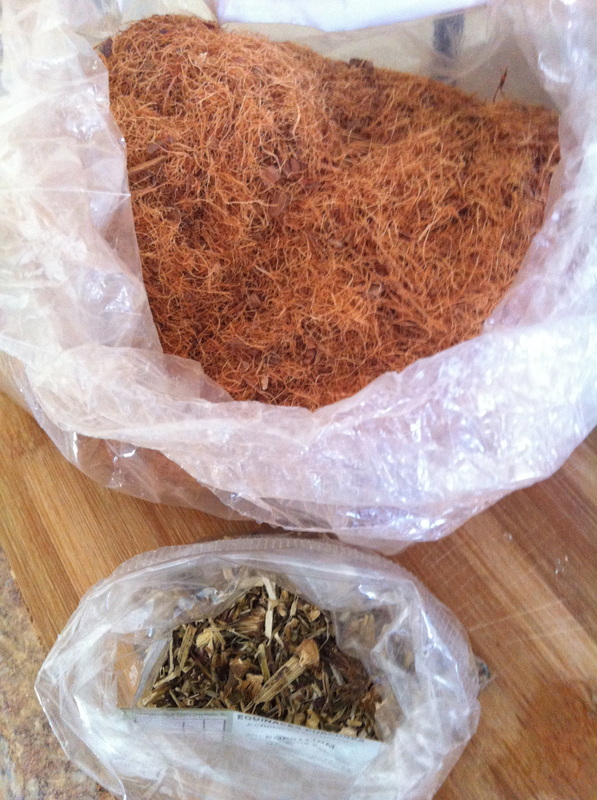 Cat's Claw bark and Echinacea Purpurea root Cat's Claw bark and Echinacea Purpurea root Sometimes my sixth sense tells me things to do that I just follow. And it works.
Five years ago inside a herbal pharmacy in Sao Paulo (Brazil), I came across those two plants when looking for immune system boosters and to help someone I knew with a serious disease that was weakening his immune system. I decided to buy both and read more to better use them. Some articles and studies showed that Echinacea was not as strong as Cat's claw, but when combined it could help to stimulate my immune system and fight bacterias more efficiently. When I start to feel that my body is getting weak, when it's cold, or when there's people sick around , I make the tea combining the two plants and I feel it helps a lot. Yes, there are pills, but I prefer to do as raw and whole as possible, always trying to avoid processes on everything I take. Let's learn a little bit more: - Cat's claw, or Uncaria Tomentosa ia a large woody plant found in the Amazon rainforest that contains different alkaloides, glucosides, triterpene, flavonoides and tannines that work as anti-viral and anti-bacterial on the bodies immune system. Native to Peru, Uncaria Tomentosa has also shown to benefit asthma and bronchitis sufferers. It has been used by the indigenous people of the Amazon rainforest for at least 2,000 years, and in Peru and Europe since the early 1990s as an adjunctive treatment for cancer and AIDS as well as for other diseases that target the immune system. It's main actions (in order) are: immune stimulant, anti-inflammatory, antimutagenic (cellular protector), anticancerous, antiulcerous. Adding lemon juice or vinegar to the decoction when boiling will help extract more alkaloids and fewer tannins from the bark. Some studies on cat's claw showed that it might decrease fertility, so I'd advice whoever is seeking to get pregnant to avoid it. - Echinacea Purpurea are found growing in moist to dry prairie and wood areas of eastern and central of North America. The complex sugars (Polysaccharides and Echinaceoside) of the herb are its immune stimulants known for fighting infection by making our own immune cells more efficient at attacking bacteria, instead of attacking directly the bacteria as common antibiotics do. Two proven effects of echinacea are in stimulating phagocytosis (the consumption of invading organisms by white blood cells and lymphocytes) and inhibiting an enzyme (hyaluronidase) secreted by bacteria to help them gain access to healthy cells. With long-term use, echinacea appears to lose effectiveness. I prepare my tea as I cook mostly of my food. First I heat just the water, and when boiling I put the plants and turn off the heat, allowing it to seat until hot enough to drink. Sometimes I also add lime, ginger, turmeric and raw honey. Sources: http://www.ncbi.nlm.nih.gov http://www.herbs.org http://www.rain-tree.com  Antioxidant is a molecule capable of control the oxidation of other molecules by breaking the free radical chain of reactions, the responsible of age related deterioration. Our bodies produce free radicals as a response to environmental toxins, such as cigarette smoke, chemicals, sunlight, radiation, lack of exercise, stress, medications, and even food (specially processed). Understanding the process: Think about when you slice an apple. In seconds the exposed flesh turns from white to brown. This occurs because of oxidation. But if you add orange juice or lemon juice to the apple right after you slice it, it will keep it whiter longer because the antioxidant vitamin C in the juice. Oxidation is like biological rusting and similar to what occurs to an iron bar that is dumped in the ocean. Free radicals seek to steal electrons from many of the proteins in your body and can also result in damage to your DNA and other cell structures, that's why we have been seeing a lot in the media about antioxidant food and beauty products to fight anti aging process. The most efficient way to optimize your antioxidant intake is to eat a large variety of locally grown fresh organic vegetables and juicing, especially if you eat the pulp. Acai berry is one of the most powerful antioxidant food to fight free radicals in our system, but find below a list of vegetables and fruits high in antioxidants such as vitamin C, vitamin E, and Beta-carotene. Also, reducing sugar and processed foods intake will decrease your antioxidant stress. SOME ANTIOXIDANT FOODS: Vitamin C: Asparagus, Broccoli, Cantaloupe, Cauliflower, Grapefruit, Green and red bell peppers, Guava, Lemons, Oranges, Pineapple, Strawberries, Spinach, Kale, Collard greens, Tangerines, Tomatoes Vitamin E: Mustard greens, Swiss chard, Spinach, Turnip, Collard greens, Almonds, Peanuts Sunflower seeds Beta Carotene: Broccoli, Cantaloupe, Carrots, Cilantro, Kale, Spinach, Turnip, Collard greens, Romaine lettuce Sources: www.mercola.com www.webmd.com My experience doing a cycle with Psyllium Husk by Marisa Arruda Barbosa -Psyllium Husk is a herb that works as a “little broom” and cleans your colon.-- Did you know that we carry 2 to 20 quilograms of poop in our colon, sometimes for all of our lives? Since I heard about that I started taking many actions to be nicer with my colon! First: I sopped eating read meat and being extra careful with the others. Second: I started researching about forms of doing a colon cleanse. That’s how I came across Psyllium Husk Fiber and since very few people know about it, I wanted to share my own experience to help you in your own journey. I heard great things about flushing the colon, too, and might try it some day. But I also am afraid of flushing too much and have imbalances in my flora – and that is no good especially for girls! About the herb & the doctor who influenced me: Paulo Yamaçake is a Brazilian health practitioner that my cousin has been taking courses with. Among all his interesting teachings, I decided to follow the Psyllium Husk 10-day cycle. Here is his Website if you want to get in touch with him: www.manualhumano.com.br Psyllium Husk is an herb from India – or Europe, not sure – and we actually take only it’s skin. You can find in pills and powder. Paulo suggests that we take the powder – just to add to the experience, since the consistence is quite unique! It’s really important to follow some rules when you take it though, so do your research and ask your health practitioner if that’s right for you. What happens when you take it, is that it swells in contact with water. When you mix it in water, you will see how it turns into a gelatin quickly, so you are supposed to take it immediately. You are supposed to take Psyllium with AT LEAST 8oz of water but I took it with 16oz. Why? Because you can choke! So, really read all the rules. I didn’t have any problems with it - be careful but not scared. There are different theories as when to take it. Paulo says we should take after meals, but it makes you really feeling full. I asked him later and he said that we could take it before meals if the goal is to loose weight too – always a good bonus! Because it will make you eat less. The 10-day cycle is: Dosage: 1 tablespoon of psyllium husk in at least 8oz of water Day 1 – take before lunch Day 2 – take before breakfast and lunch From day 3 to day 8 – take before breakfast, lunch and dinner Day 9 – do like day 2 Day 10 – do like day 1. - Allow more time to go to the bathroom. It’s not going to give you diarrhea or cramps, but it will make you go more times a day to the bathroom. - You have to go to the bathroom at least once a day. If not, stop taking and start over when you get regular. - You have to take at least 2 liters of water a day – otherwise the fiber might get stuck in your colon. My experience In the first days it is common to feel bloated, which is actually the toxins. It even gave me heartburn as if I had eaten too much, (like the feeling on a Christmas Eve!) After a few days you get used to it. I read in a blog about a 3-month cleansing with Psyllium. But Paulo says he is against conditioning our colon to get used to work only with certain things. My colon has been always like that. So even after only a 10-day cycle, I was afraid that would happen to me, but it didn’t. I’ve been really regular ever since and can notice my skin is brighter and I feel lighter! We all look for our own paths to a healthy life. So, this is really my experience and personal research. I hope I can help you finding yours, too! Dr. Hiromi Shinya’s videos about our colon: Do you want to see some crazy videos? Watch Dr. Hiromi Shinya on Youtube, about the health of different intestines according to the life style. For the first time, I really decided to stop eating red meat. We all need a click: some people have it just because of animal cruelty, but I easily convinced myself that I’m an O-type blood, so I need meet. But as a virgo, I started to imagine all that meat clogged in my colon. 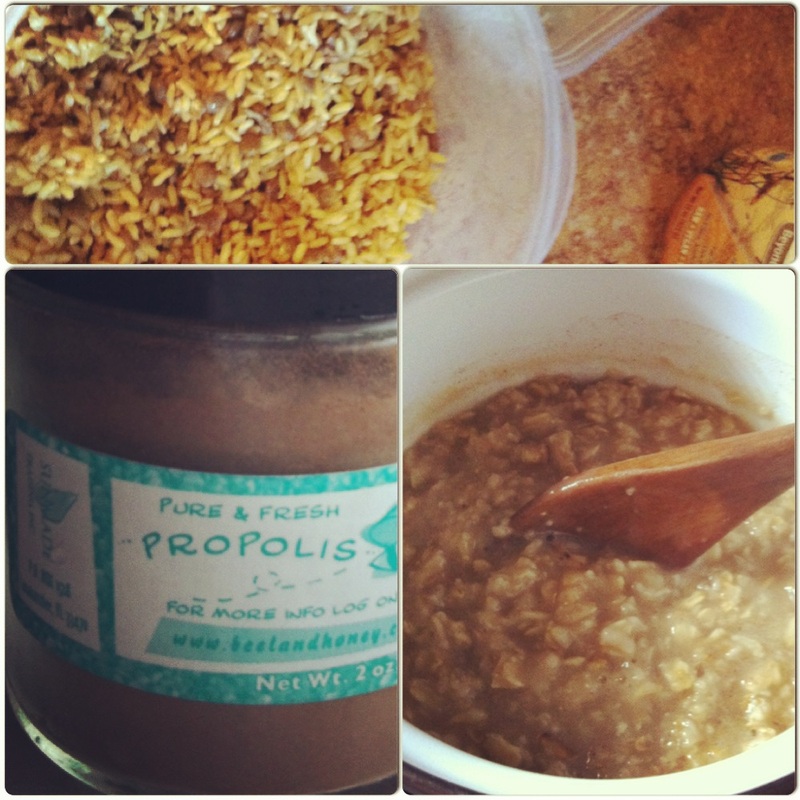 Durig detox process some might feel weak in the beginning, some develop skin harshes, others bad humor, headache... it's all part of the release of toxins.
I knew that this was not the best time to do it, because I am still in the process of readapting, but I wanted to strength my mind going through it. And I did, but in the second day, I felt that my immune system was weak, so I got a spoon of raw honey (the only sugar I've had during detox, and just one spoon a day in the morning) with powdered propolis. Here are some of the propolis benefit: 1. Antibiotic - Researchers in Brazil found that propolis has the ability to kill different strains of the infectious bacteria Salmonella. Antifungal properties have also been reported for propolis. 2. Anti-tumor - Researchers in Japan found that propolis significantly reduces the growth of lung tumors. 3. Anti-plaque - Due to its antibacterial properties, propolis may also protect against dental plaque and cavities. It may be used as an ingredient in natural toothpastes as well as oral gels. 4. Anti-inflammatory - Scientific studies suggest that propolis affects the immune system and acts as a powerful natural anti-inflammatory agent when applied to the skin. 5. Emollient - Several studies show that propolis may be effective in treating skin burns and other skin conditions. Propolis has also been used as in ingredient in toothpastes, throat sprays, burn creams, face creams, and other skincare products. Source: www.allingredientsplus.com 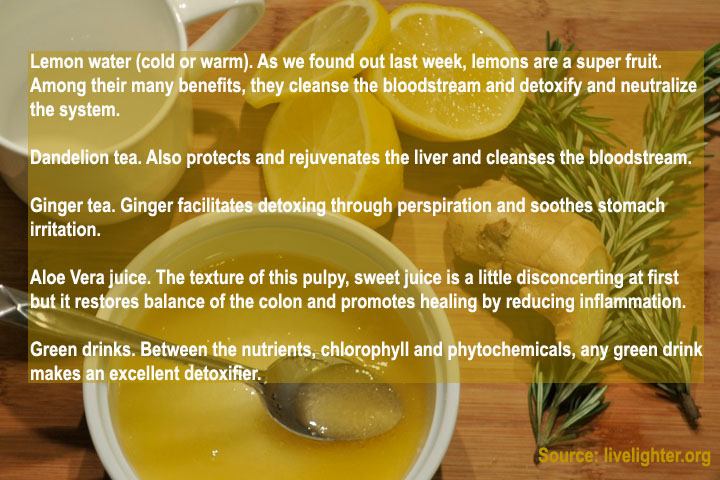 As a Yogini, I am around healthy eating habits, different diets and trendy holistic/ alternative treatments. I've done one day juicing or fasting a couple of times, but just now I decided to do my first detox.
While in California, I had the chance to be closer to my friend and holistic chiropractor, dr. Patricia Lotufo (from Linea Chiropractic) and her partner, dr. Rachel Richards (Harmony Healthy Chiropractic), and because of them, I got familiar with the importance of detoxifying the body. Even though I have a healthy eating routine, without white flour, red meat and pork, fried and canned food, cow milk, and GMO; I am very tempted by sugar, and have been drinking more coffee than usual. Besides that, I'm going thru a process of readapting and releasing things that cause stress, and there's also the daily polution to the body while going to restaurantes, having snacks at the street, usual habits that all of us have. I believe that the detox will get me mental strength and focus for my goals. During this seven day detox I decided to cut sugar, alcohol, soy, dairy and coffee. I am eating two-thirds of my food raw, and plenty of herbal tea with spices, especially turmeric. Check this article about the benefits of it: www.sanatura.com/1/post/2012/08/got-turmericby-eliane-carotta.html The only sugar I’m taking is one big spoon of raw honey a day (I ate a few raisins in the first day, but them stopped- dried fruit has sugar! Not allowed!). The first couple of days I drank two cups of green tea per day, then just decaff herbal tea. My tips on the steps to detox: 1. To be familiar with your body and what you should or not eat to balance it. I follow the Ayurvedic Medicine, so the dosha test below is the first step I do and recommend: www.sanatura.com/1/post/2012/03/dosha-test-discover-your-body-type.html 2. After knowing the answer, google about your body type, know the foods you should take or avoid, and from there, choose the ones allowed that you prefer to use during the detox. To consider that a detox, you MUST cut dairy, sugar, coffee, alcohol, and the only flour or milk you should take is the rice based. Regarding meat, I recommend just wild caught fish after three days with just vegetables, some grains and fruits. 3. My technique to keep strong during detox is to be organized on the fridge. I hide all food I won’t be able to eat in a drawer and make different containers with meal and snacks portions for the next 2 or 3 days. I was supposed to juice too, but since I recently moved and the house is not yet ready with appliances, I decided to just eat the vegetables. 4. The base of my detox is having at least 6 glasses of tea per day. The first two days I drank two glasses of green tea (because of caffeine and to speed metabolism), and everyday I drink herbal teas (boldo or Cachamai herbal tea, and chamomile before sleep) for the stomach. First thing in the morning: drink a big glass of water with a squeezed lime and a dash of turmeric. Recipe to drink once a day: Chop a piece of ginger and put to boil with water in low temperature, after 1min boiling, let it sit, squeeze half of a lime (or lemon), put a dash of turmeric, a small cinnamon stick and drink hot. If your immune system is low, you can add pieces of garlic to be boiled with the ginger. Stay tuned; in a couple of days I will post more recipes and meal suggestions! Feel free to contact me in case you need help! And please, let’s share experience and post questions at Sanatura page on Facebook, so everyone can learn and benefit from healthy habits! www.facebook.com/sanatura |
 RSS Feed
